
Privacy & Tech · 2026
Why Free Apps Are Never Really Free — How They Actually Make Money
Downloading an app costs nothing. But that doesn't mean you're not paying. Here's exactly what's being exchanged.
There's a phrase that's been floating around tech circles for over a decade now: "If you're not paying for the product, you are the product." It's been repeated so often it's started to feel like a cliché. But most people who've heard it still don't know specifically what it means in practice — what exactly is being taken, how it's being used, and who's profiting from it.
Free apps aren't charity. The companies behind them have investors, employees, servers, and very real operating costs. When there's no price tag at download, the revenue has to come from somewhere else. This article breaks down exactly how — from the obvious to the ones most people never think about.
The Basic Economics of a "Free" App
Running an app costs real money — servers, engineering teams, customer support, security, compliance, and marketing. A mid-sized app with a few million users can easily spend millions per year just keeping the lights on. That money has to come from somewhere.
The business models below are how apps close that gap. Most apps use a combination of several rather than relying on just one. And the less obvious the model, usually the more important it is to understand.
| Revenue Model | How Common | Transparency |
|---|---|---|
| Advertising | Extremely common | Visible |
| Data collection & sale | Very common | Hidden |
| Freemium upgrades | Very common | Visible |
| In-app purchases | Common (esp. games) | Visible |
| Affiliate commissions | Common | Partial |
| Behaviour profiling | Common | Hidden |
| Attention farming | Social & media apps | Hidden |
1. Advertising — The Obvious One
Ads are the most visible revenue model and the one people least object to, which is probably why it's so widespread. You use the app, the app shows you ads, advertisers pay for those impressions and clicks. Simple enough in theory.
What most people don't fully appreciate is how targeted those ads are — and why. The reason a free weather app needs to know your location continuously, or why a free game asks for access to your contacts, often isn't about functionality. It's about building a richer data profile that lets them charge advertisers more per impression. Targeted ads pay four to ten times more than generic ones. That gap is the reason apps collect far more data than their core feature would ever require.
# Why free apps want excessive permissions
Generic ad impression  →  pays ~$0.50 per 1,000 views (CPM)
Targeted ad impression →  pays $3–$15+ per 1,000 views (CPM)

# What makes an ad "targeted"
- Your age, gender, location
- What other apps you have installed
- Your browsing and purchase history
- Time of day you're active
- How long you spend on certain content

# The result
An app with 5 million users and good targeting data
can generate millions per year in ad revenue alone —
without ever charging users a single penny.2. Data Collection and Sale — The Hidden Revenue Stream
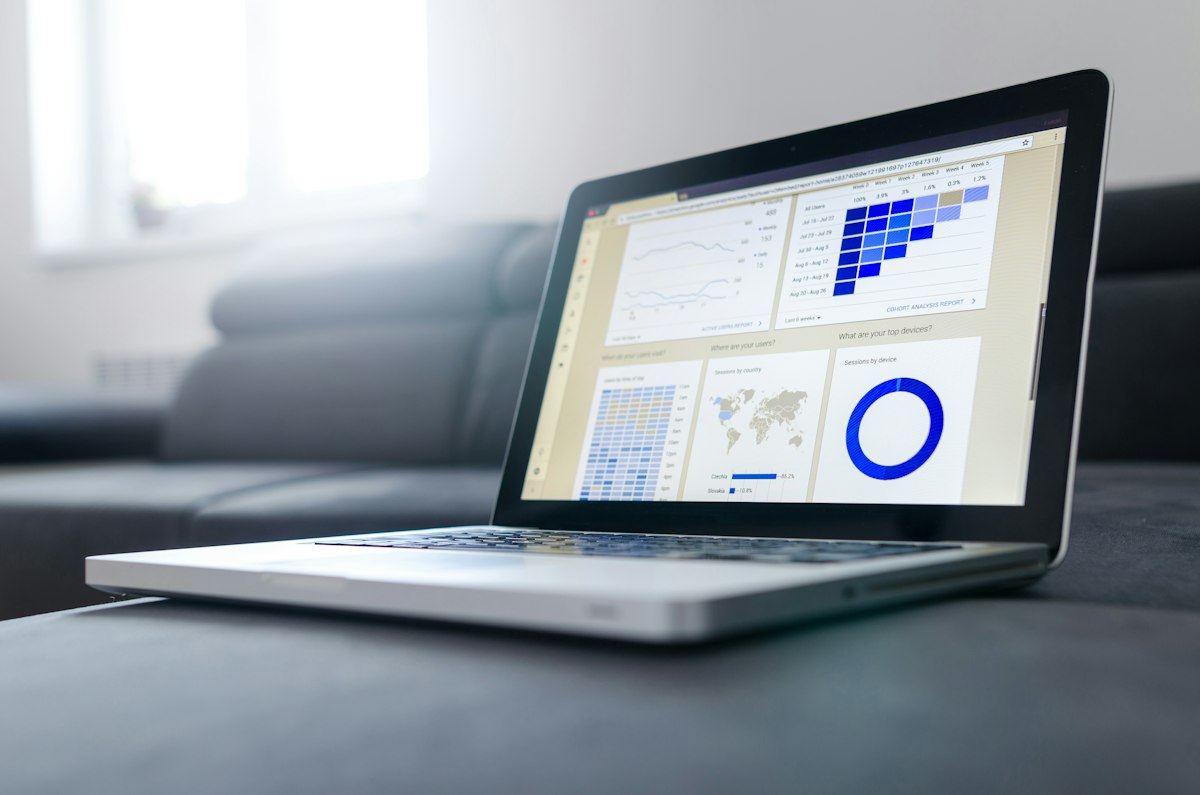
This is the one people know about in the abstract but rarely think through concretely. A huge number of free apps — particularly in health, fitness, weather, and utility categories — sell user data to third-party data brokers. These brokers aggregate it with data from dozens of other sources and sell detailed profiles to insurers, employers, financial institutions, marketers, and researchers.
The data is technically "anonymised" before sale. But anonymisation is often more fragile than it sounds. Researchers have repeatedly shown that combining a few data points — rough location, age range, a few behavioural signals — is enough to re-identify individuals from supposedly anonymous datasets. The privacy guarantee in the terms of service often doesn't hold up in practice.
# Categories most likely to sell data
- Health and fitness apps (steps, sleep, symptoms)
- Period and fertility trackers
- Mental health and mood tracking apps
- Free VPNs (ironic, but common)
- Weather apps (need location, sell it)
- Flashlight and utility apps
- Free photo editors

# Who buys that data
- Insurance companies
- Financial lenders and credit agencies
- Advertisers and marketing platforms
- Data brokers who resell it further
- Academic and commercial researchers
3. The Freemium Model — Getting You Hooked First
Freemium is probably the most honest of the free app business models. The app is genuinely free to use — basic features, no charge. Then at some point, you either hit a limit or discover that the features you actually want are locked behind a subscription. The free tier is essentially a very long demo.
Spotify, Duolingo, Notion, Dropbox — they all run on this model. It works because the conversion rate doesn't need to be high. If 5% of a million users upgrade to a paid plan, that's 50,000 paying customers the company never had to acquire through traditional sales. The 95% on the free tier aren't wasted — they're either potential future converters, or they provide social proof and word-of-mouth that keeps bringing in new users.
4. In-App Purchases — Especially in Games

Free mobile games are one of the most profitable categories in all of software — and almost none of that profit comes from the word "free" in the app store listing. The revenue comes from in-app purchases: extra lives, virtual currency, cosmetic items, speed boosts, or access to new content.
Most users spend nothing. The model works because a small percentage of players — sometimes called "whales" in the industry — spend enormous amounts. One person spending £500 subsidises thousands of free players. The game design is deliberately engineered around this: artificial friction, timed barriers, social pressure, reward loops that feel satisfying just long enough to keep you coming back and just frustrating enough to make spending feel like relief.
# How free game economics work
~60% of players    → spend nothing, ever
~38% of players    → spend a small amount occasionally
~2% of players     → "whales," spend heavily and regularly

# That 2% typically generates 50–80% of total revenue

# Design patterns used to encourage spending
- Energy timers (wait 8 hours or pay to skip)
- Limited-time offers with countdown clocks
- Loot boxes with variable rewards (gambling mechanics)
- Social leaderboards creating competitive pressure
- "Almost there" failure states just before a level ends5. Attention Farming — Your Time Is the Product
Social media apps — Instagram, TikTok, X, YouTube — don't primarily sell your data. They sell your attention. The longer you spend in the app, the more ads you see, and the more revenue they generate. This sounds simple, but it has significant design consequences.
Every feature in a high-engagement social app is designed around one metric: time in app. Infinite scroll removes natural stopping points. Notification systems are tuned to bring you back when you leave. Algorithms surface content that provokes strong reactions — not because that content is good for you, but because strong reactions keep you watching. The app is free because your attention is the thing being sold to advertisers — and that attention is worth more the longer it can be held.
6. Affiliate Commissions — The Invisible Recommendation
This one's common in price comparison apps, shopping tools, finance apps, and "best of" recommendation services. The app is free to use. But when it recommends a product, a credit card, an insurance policy, or a service — and you sign up — the app earns a referral commission.
There's nothing inherently wrong with this model. The problem is transparency. When you ask a free budgeting app which savings account pays the best interest, it might be giving you the genuinely best answer — or it might be giving you the answer that earns it the highest commission. Without disclosure, you can't tell the difference. And the disclosure, when it exists at all, is usually buried in terms and conditions.
# Apps commonly using affiliate models
- Price comparison tools (flights, insurance, energy)
- Free budgeting and finance apps
- Shopping browser extensions (cashback tools)
- Travel and hotel booking aggregators
- Credit score and loan comparison apps

# Questions worth asking
→ Is this recommendation ranked by quality or commission?
→ Does the app disclose its affiliate relationships?
→ Would I reach the same conclusion if I searched directly?

# Red flag
If every "top recommendation" happens to be a premium
partner product, the ranking probably isn't purely merit-based.
All Six Models — At a Glance
| Model | What You Give | Transparent? | Concern Level |
|---|---|---|---|
| Advertising | Attention + data | Mostly | Medium |
| Data sale | Personal data, often sensitive | Rarely | High |
| Freemium | Nothing (until you upgrade) | Yes | Low |
| In-app purchases | Money (optional but pressured) | Mostly | Medium |
| Attention farming | Time and focus | No | High |
| Affiliate | Trust in recommendations | Sometimes | Medium |
Frequently Asked Questions
▸ Are free VPNs safe to use?
Most free VPNs are genuinely problematic from a privacy standpoint. A VPN's entire value is routing your traffic through their servers — which means a free VPN provider can see everything you're doing. Many free VPNs monetise by logging and selling that browsing data to third parties, which is precisely the opposite of what a VPN is supposed to do. If privacy matters to you, a paid VPN from a provider with an audited no-logs policy is worth the cost.
▸ Is it worth paying for apps to avoid data collection?
Sometimes — but paying doesn't automatically mean no data collection. Plenty of paid apps still collect and share data; they've just separated the revenue streams. The key is reading the privacy policy (or a plain-English summary of it) before assuming a price tag means privacy. For health and finance apps in particular, it's worth checking explicitly what data is collected and whether it's sold.
▸ How do I find out what data an app actually collects?
On iOS, check the App Privacy section on an app's App Store listing — Apple requires developers to declare what data is collected and how it's used. On Android, the Google Play Data Safety section does the same. Neither is perfect (it relies on developer honesty), but they're a useful starting point. For a deeper look, sites like Exodus Privacy analyse Android apps and list exactly which trackers are embedded in them.
▸ Do apps share data with each other?
Not directly — but they share data with the same intermediaries. Most apps embed third-party SDKs for analytics, advertising, or crash reporting (Facebook SDK, Google Analytics, Adjust, AppsFlyer). These SDKs report usage data back to their parent companies, who then combine it with data from every other app that uses the same SDK. So while App A doesn't share data with App B, both might share with the same broker.
▸ What's the most privacy-respecting way to use free apps?
Limit permissions to what the app genuinely needs. If a free torch app wants your contacts, deny it. If a weather app asks for always-on location, set it to "only while using." Use a separate email address for app sign-ups so your primary inbox and identity aren't tied to dozens of data-hungry services. And for anything health-related, strongly consider paying for a privacy-respecting alternative rather than assuming a free app is safe.
Conclusion
Using free apps isn't inherently a bad idea — the freemium model is perfectly reasonable, ad-supported apps are a fair trade when the ads are disclosed, and affiliate-based tools can genuinely save you money. The issue isn't "free = bad." The issue is going in with your eyes open rather than assuming free means no cost.
The models worth being most cautious about are the hidden ones — data brokers you never consented to, attention engineering designed to override your intentions, and affiliate recommendations dressed up as objective advice. Knowing these exist and knowing how to spot them is most of the work. You don't have to stop using free apps. You just have to know what question to ask before you install one: not "how much does this cost?" but "how does this make money?"
Before installing any free app — ask these four questions
1. What permissions is it asking for, and does it actually need them?
2. What does the App Store or Play Store privacy label say it collects?
3. How does this company make money — and is that model visible or hidden?
4. Is there a paid alternative that's worth it for this category of data?
Four questions. Two minutes. Enough to make a genuinely informed choice.